
Summary
Demystifying artificial intelligence terminology empowers you to confidently navigate the evolving technological landscape and unlock profound insights from unstructured content.
By grasping advanced concepts like natural language processing, retrieval-augmented generation and neural networks, you can effectively automate workflows, seamlessly integrate systems and drive transformational outcomes.
Establishing specialized roles such as a chief AI officer or context engineer ensures your organization deploys artificial intelligence responsibly, maintaining strong data governance, ethical standards and regulatory compliance.
AI is an ever-present term in today's technological landscape, but its complexities can be bewildering. Understanding the fundamentals of artificial intelligence (AI) requires more than just recognizing its buzzwords; it necessitates a deeper comprehension of its terminology and concepts.
Below, we demystify the world of AI by breaking down the key terminologies and simplifying their definitions. Increasing your understanding of AI terminology will give you a better grasp of how AI functions and equip you to navigate discussions, developments and innovations within your organization.
General AI concepts
There are three general concepts that form the foundation of modern AI systems and are essential for understanding the capabilities, limitations and potential applications of AI technology. These three are:
Artificial intelligence (AI):
Artificial intelligence (AI) is a broad field of computer science focused on creating systems or machines that can perform tasks that would typically require human intelligence. These tasks include understanding natural language, recognizing patterns, making decisions and learning from experience.
As you delve into the world of AI, you may encounter terms like "generative AI" and "traditional AI." Traditional AI uses predetermined rules and algorithms to complete specific tasks, such as analyzing data and drawing conclusions (for example, the recommendations Netflix makes for you based on your streaming history, or a computer program that makes medical diagnoses based on x-rays).
Generative AI goes a step further by actually creating new content (copy, imagery and more) by learning from data patterns and answering prompts; well-known generative AI programs include ChatGPT, Bard and Midjourney.
> Read more | AI Content Management
Machine learning (ML)
ML is a subset of AI that focuses on developing algorithms and statistical models that enable computers to learn from and make predictions or decisions based on data.
Unlike traditional programming where explicit instructions are provided, in ML, algorithms iteratively learn patterns and relationships from data without being explicitly programmed to do so.
> Read more | What is machine learning (ML)?
Deep learning (DL)
DL is a subset of ML that is inspired by the structure and function of the human brain's neural networks. DL algorithms, also known as artificial neural networks, consist of multiple layers of interconnected nodes (neurons) that process and transform huge volumes of data and unstructured content through a series of mathematical operations.

Forrester study: Unlocking the full potential of AI agents
Enterprise-wide AI agent adoption is accelerating
In this Hyland-commissioned study by Forrester Consulting, Forrester found that more than 45% of organizations already use AI agents and another 25% are piloting them. Although adoption is accelerating, most organizations struggle to scale beyond early use cases due to a lack of enterprise context.
Forrester provides key recommendations for how to get AI agents right, as well as detailed data on enterprise trends around agent use. Download this report to learn more about how organizations are looking to AI agents to optimize workflows, make smarter decisions and create more personalized experiences.
Agentic AI concepts
AI agents
AI agents are proactive, goal-oriented systems that can autonomously make decisions. They are designed to handle complex tasks by adapting and learning over time.
> Read more | Explore the power of AI agents
Multi-agent systems
Multi-agent systems consist of multiple AI agents that collaborate to solve problems. These systems can handle tasks that are too complex for a single agent to manage alone.
Agentic AI
Agentic AI represents an advanced level of autonomy in artificial intelligence. It dynamically plans and executes actions to manage entire workflows without needing predefined instructions.
Model Context Protocol
is an open standard for AI agent communication. It enables agents to share information and collaborate effectively across different systems and platforms.
> Read more | Understanding the different types of AI agents
Types of content
AI systems process different types of content, each with a unique organizational model. Understanding these formats is key to understanding how AI interacts with enterprise data.
Structured content
Structured content is highly organized data that fits into a fixed format. It typically resides in databases or spreadsheets, where each data point has a predefined location, making it easy to process.
Semi-structured content
Semi-structured content contains some organizational elements but does not follow a rigid data model. Examples include emails and invoices, which have predictable fields alongside free-form text.
Unstructured content
Unstructured content is information that lacks a predefined data model or organizational structure. It represents the majority of enterprise content, including documents, videos, images and audio files.
Machine Learning (ML)
Each type of ML provides a different approach to performing tasks and solving problems, allowing for a wide range of applications across different fields.
Let’s look into the different types of ML and how they help businesses achieve their goals:
Supervised learning (SL)
Supervised learning involves algorithms learning from labeled data, where training examples already contain correct answers.
The algorithm receives input-output pairs, then learns to map input to output, aiming for accurate predictions with new, unseen data.
Self-supervised learning (SSL)
Self-supervised learning is a technique where a model learns to make predictions about certain parts of the input data using the other parts as context.
This involves training the model to predict missing words within a text based on the surrounding context, essentially learning from the data itself without explicit human annotations.
Unsupervised learning (UL)
Unsupervised learning utilizes unlabeled data, lacking corresponding output labels for training.
Instead, the algorithm seeks to uncover hidden patterns, structures or relationships within the dataset by clustering similar points together to simplify its representation.
Reinforcement learning (RL)
In reinforcement learning, an agent learns to make sequential decisions through interactions with the environment, aiming to maximize a cumulative reward signal.
Unlike supervised and unsupervised learning, reinforcement learning is based on learning through trial and error by taking actions in the environment, observing the resulting rewards and adjusting behavior to achieve long-term goals.

Harvard Business Review Analytic Services pulse survey insights: Going beyond traditional AI and toward agentic AI
Many organizations find themselves unprepared to harness the full potential of AI. This pulse survey from Harvard Business Review Analytic Services reveals that while 94% of leaders recognize the importance of well-connected data for AI success, only 27% have achieved it.
In “Bridging the Readiness Gap to the Agentic Enterprise,” learn about strategies for fully connecting your content and how leading enterprises are thinking about transforming unstructured content into connected pipelines.
Modeling concepts
Modeling concepts serve as the bedrock for predictive analytics and insightful decision-making. Understanding these three concepts is pivotal in understanding the meaning behind data-driven modeling:
Algorithm
An algorithm is a set of step-by-step instructions or rules designed to solve a specific problem or perform a particular task.
In the context of ML and data science, algorithms are used to train models and make predictions based on input data.
Neural network
A neural network is a computational model inspired by the structure and function of the human brain.
It consists of an interconnected network of artificial neurons organized into layers, including an input layer, one or more hidden layers and an output layer.
Overfitting
Overfitting occurs when a ML model learns to capture noise or random fluctuations in the training data rather than the underlying patterns or relationships.
This phenomenon occurs when a model becomes too complex or flexible relative to the amount of training data available, resulting in the model fitting the training data extremely well but performing poorly on new data points.
Evaluation metrics
Evaluation metrics are vital tools for assessing model performance. From accuracy to precision and recall, understanding these metrics is key to making informed decisions and driving progress. Let’s unpack the types of evaluation metrics:
Accuracy
Accuracy is calculated as the ratio of the number of correct predictions to the total number of predictions made by the model.
While accuracy provides a general overview of the model's performance, it may not be suitable for imbalanced datasets, where the classes are not represented equally.
Precision
Also known as positive predictive value, precision measures the proportion of true positive predictions out of all positive predictions made by the model.
Precision is particularly useful when the cost of false positives is high, and it complements accuracy by providing insights into the model's ability to avoid false positive predictions.
Recall
Recall focuses on the ability of the model to correctly identify all positive instances, regardless of the number of false negatives.
It is calculated as the ratio of true positives to the sum of true positives and false negatives, making it essential in scenarios where missing positive instances is more critical than incorrectly classifying negative instances.
F score
The F score provides a balanced measure of a model's performance by combining both precision and recall into a single metric, allowing for a comprehensive evaluation of the model's effectiveness.
It is calculated as the mean of precision and recall, where a higher F score indicates better overall performance.
Neural networks and deep learning
Neural networks and deep learning stand at the forefront of innovation, revolutionizing how machines perceive, learn and generate insights from data. Let’s understand how these powerful paradigms mimic the workings of the human brain, enabling computers to autonomously learn complex patterns and make decisions:
Convolutional neural network (CNN)
A CNN is a deep learning model specifically designed for processing structured grid data, such as images or audio.
CNNs are characterized by their ability to automatically learn hierarchical patterns and features directly from raw input data.
Generative adversarial network (GAN)
A generative adversarial network (GAN) is a type of deep learning model that consists of two neural networks: a generator and a discriminator, which are trained simultaneously through adversarial learning.
The generator network learns to generate synthetic data samples that are similar to the training data, while the discriminator network learns to distinguish between real and fake samples.
> Read more | AI and data capture: An evolution of efficiency

Subscribe to The Shift
Hyland’s monthly newsletter helps you elevate your content management strategy
Offering unparalleled insights into the AI and cloud technologies transforming what content can do, The Shift gives you actionable strategies from industry thought leaders. Learn from real-world success stories and innovative perspectives that will keep your organization at the forefront of ECM transformation.
Subscribe to stay ahead, stay informed and make your enterprise content an even more strategic asset.
Natural language processing (NLP) and understanding
A subfield of AI, NLP forms the cornerstone of human-computer interaction. It is these interconnected fields that empower machines to understand, generate and respond to human language, revolutionizing the way we communicate and interact with technology. Let’s learn how:
Natural language processing (NLP)
NLP is a field of AI that’s focused on enabling computers to understand, interpret and generate human language in a way that is both meaningful and contextually relevant.
NLP techniques employ ML algorithms, statistical models and linguistic rules to process and analyze text data, allowing computers to extract insights and infer meaning.
Natural language understanding (NLU)
NLU is a subfield of NLP that focuses on enabling computers to comprehend and interpret the meaning of human language by extracting meaning, context and intent from text data.
For various applications, NLU is essential in powering virtual assistants, chatbots, information retrieval systems and sentiment analysis.
Natural language generation (NLG)
NLG generates human-like text/speech by converting structured data/other forms of input into coherent and contextually relevant language, allowing computers to communicate with humans in natural language.
By adopting NLG techniques to create text based on predefined templates, rules or statistical models, it is able to generate personalized and adaptive responses using ML algorithms.
Automatic speech recognition (ASR)
It is a technology that enables computers to analyze audio input and convert it into written text.
ASR is used in voice interfaces, virtual assistants, dictation systems and voice-controlled devices, allowing hands-free interaction and improving accessibility for users.
Retrieval-augmented generation (RAG)
Retrieval-augmented generation (RAG) is an AI technique that improves the quality of large language model (LLM) responses. It connects the model to an external knowledge base, allowing it to retrieve relevant, up-to-date information before generating an answer. This process grounds the AI's output in factual data, resulting in more accurate and context-aware responses.
> Read more | Business benefits of retrieval-augmented generation
Unstructured data terms
Chunks and chunking
Chunks are the smaller pieces of text, such as paragraphs or sections, created during the chunking process.
Chunking breaks down large documents into smaller, manageable pieces. This process allows AI to process the information more effectively.
Ontologies
These are organized maps of knowledge that show how concepts are related, like a chart that links diseases to symptoms, treatments and medications.
Knowledge graph
A knowledge graph is a connected view of entities, such as documents, people, systems, KPIs and actions, structured by industry-specific ontologies and continuously updated as documents change or AI agents take actions. In other words, ontologies define the structure, while knowledge graphs fill in the content.
Semantics
Semantics refers to the underlying meaning of words and phrases. It allows AI to understand that terms like “doctor” and “physician” are conceptually the same.
Embeddings
Embeddings convert text into numerical representations that capture its semantic meaning. This allows AI to understand relationships between concepts, even with different wording.
AI ethics and frameworks
Ethical considerations and robust frameworks are crucial in the world of AI. AI ethics guide the responsible development and deployment of AI technologies, while AI frameworks provide the tools and resources necessary to build innovative and ethical AI solutions. Let’s take an in-depth look:
AI ethics
AI ethics provides the moral principles and guidelines for the responsible development and deployment of artificial intelligence. This field addresses critical challenges such as managing bias in algorithms, ensuring transparency in AI decision-making, preventing model hallucinations, and establishing clear governance frameworks to guide the technology's use.
AI frameworks
AI frameworks facilitate the development, deployment and management of AI applications and systems with a set of prebuilt components, algorithms and tools for building and training ML models.
This accelerates innovation by providing developers with the resources needed to build sophisticated AI solutions efficiently and effectively.
Specialized terms
When it comes to technology and data-driven solutions, these specialized terms encompass a wide array of techniques that are reshaping industries and driving innovation. Let’s deep dive into them:
Adversarial machine learning (AML)
AML is a field of study within ML that is focused on understanding and defending against adversarial attacks on ML models, such as manipulating input data to deceive or compromise the performance of ML models.
Through methods such as adversarial training, robust optimization and adversarial example detection, AML techniques aim to develop robust ML models that are resilient to these attacks.
Computer vision
Computer vision is a branch of AI and computer science that focuses on enabling computers to interpret and understand visual information from the real world.
The algorithms analyze and process digital images or videos to extract meaningful insights, recognize objects, detect patterns and perform tasks such as image classification, object detection, facial recognition and image segmentation.
Pattern recognition
Pattern recognition is a field of study that focuses on the automatic detection and identification of patterns or regularities within data. \
It encompasses a wide range of methods, including statistical analysis, ML algorithms and signal processing techniques, to enable automation, decision-making and insight generation from complex datasets.
Prescriptive analytics
Prescriptive analytics is an advanced form of analytics that goes beyond predicting future outcomes to provide recommendations on the best course of action to achieve desired outcomes.
Some of the factors considered include multiple possible actions, constraints and objectives to determine the optimal decision or strategy in a given scenario.
Human-in-the-loop (HITL)
HITL is a model or system where human insight is integrated at various stages of the process to provide feedback, validation and decision-making.
This approach combines the strengths of human intelligence and machine automation to ensure that tasks are completed in a precise manner while leveraging the distinctive capabilities of human judgment.
AI context
These concepts provide the essential framework AI uses to understand the relationships between different pieces of information.
Ontologies
Ontologies create organized maps of knowledge that define how different concepts relate to one another. For example, an ontology can link a specific disease to its symptoms, treatments and medications.
Knowledge graph
A knowledge graph provides a connected view of various entities, including documents, people and systems. Industry-specific ontologies structure this information, which is updated as content changes or AI agents act. In essence, ontologies define the structure, and knowledge graphs provide the content.
Roles in AI/ML
There are specialized roles within the AI and ML world that are crucial for turning data into actionable insights. Let's explore the key roles driving the success of AI and ML projects:
Chief AI Officer (CAIO)
The CAIO is essential for enterprise AI transformation. This strategic leader ensures AI investments align with business outcomes and drives organizational change. For companies leveraging content management, the CAIO translates technical AI capabilities into product strategy. They also manage risk, which is crucial for maintaining customer trust and regulatory compliance.
AI architect
An AI architect is a senior-level professional who orchestrates the technical blueprints for AI systems. They bridge the gap between business strategy and technical execution. There role is to ensure AI infrastructure integrates seamlessly with existing data systems. For organizations focused on governance, the AI architect designs the framework that supports secure and scalable AI-powered solutions across the enterprise.
AI engineer
An AI engineer builds and deploys practical AI systems to address specific business challenges. They focus on the integration of pre-trained models with enterprise data to create scalable and efficient applications. In a content-centric environment, the AI engineer ensures that AI-powered tools are secure and capable of handling complex data engineering requirements at scale.
AI ethicist/Governance lead
This role focuses on responsible AI development and deployment. An AI ethicist develops frameworks for ethical AI use, identifies biases and establishes transparency standards. For organizations with strong data governance in content management, this role leverages existing strengths. Ethical AI becomes a competitive differentiator, reinforcing a reputation for trustworthy information management and preparing for future AI regulations.
Context engineer
A context engineer builds structured environments that enable AI to understand requests across complex, multi-step workflows. Unlike prompt engineering, this role focuses on creating systems with memory, data retrieval and business rules. For content management companies, context engineers are vital. They design the contextual framework that allows AI to interpret document hierarchies, user permissions and compliance requirements, making AI truly intelligent.
Data architect
A data architect is responsible for designing and implementing the overall data architecture and infrastructure within an organization.
This involves defining the structure, organization, integration and management of data assets to support business objectives and enable data-driven decision-making.
Data manager
A data manager is tasked with overseeing the day-to-day operations of data management processes and systems within an organization.
To ensure the quality, integrity and availability of data assets, this role includes data collection, storage, cleaning, integration and maintenance.
Data scientist
A data scientist is a professional skilled in extracting insights and knowledge from data using advanced analytical, statistical and ML techniques.
Data scientists analyze large and complex datasets to uncover patterns, trends and relationships that can inform business decisions and drive strategic initiatives.
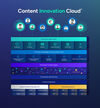
Hyland Content Innovation Cloud™
The platform to power content innovation
Content Innovation Cloud is the future of enterprise content management. By leveraging a unified content, process and application intelligence platform, your organization can unlock profound insights from enterprise content and unstructured data — fueling innovation without disruption.
Additional concepts
Innovations in AI and ML are driven by a diverse set of concepts and technologies. Let's explore some additional foundational concepts and uncover their significance in modern applications:
Deep research
Deep research in AI refers to the in-depth exploration and analysis of complex topics, datasets or problems to uncover insights, patterns and solutions. It often involves leveraging advanced AI tools, machine learning models and data science techniques to go beyond surface-level understanding. Deep research is critical in areas like scientific discovery, market analysis and innovation, where nuanced and detailed findings drive progress.
For example, deep research might be used to analyze genomic data for identifying potential treatments for rare diseases.
Prompt engineering
Prompt engineering is the practice of designing and refining input prompts to optimize the performance of generative AI models. Since AI models respond to the instructions they are given, crafting precise, clear and contextually relevant prompts can significantly improve the quality and relevance of the output.
For instance, a well-engineered prompt might guide an AI to generate a detailed marketing plan or a creative story, while a vague prompt could lead to incomplete or irrelevant results.
Context engineering
Context engineering involves structuring and providing the right contextual information to AI systems to enhance their understanding and performance. By embedding relevant background details, constraints or situational data into the input, context engineering ensures that AI models generate outputs that are accurate, meaningful and aligned with the intended use case.
For example, in customer support chatbots, context engineering might include feeding the bot with a user’s purchase history to provide personalized assistance.
Edge AI
Edge AI refers to the deployment of artificial intelligence directly on edge devices, such as smartphones, IoT devices or sensors, rather than relying on centralized cloud servers. This approach enables real-time data processing, reduced latency and enhanced privacy, as data is processed locally on the device.
Brute force search
Brute force search is a straightforward search method that systematically explores all possible solutions to a problem, typically through exhaustive trial and error.
This approach checks every possible option until a solution is found or all possibilities have been exhausted.
The importance of understanding AI terminology
Having a firm grasp of AI terminology will equip you with the language and knowledge needed to navigate and contribute to advancements in artificial intelligence. It fosters effective communication, collaboration and innovation across industries, paving the way for responsible, ethical and impactful applications of AI that benefit society as a whole.

Article
Understanding agentic AI architecture
Move beyond simple AI responses and discover the structural design that empowers AI agents to autonomously plan, reason and execute complex tasks in dynamic environments.

Article
Streamline automation by embedding agentic AI workflows
Discover how AI agents are transforming business processes from rigid, rule-based tasks into dynamic, goal-oriented systems that can reason, plan and adapt.

Article
AI agents, AI assistants and agentic AI
AI agents are proactive, achieving goals autonomously. AI assistants react to commands, performing defined tasks.