
Summary
Enterprise automation is evolving from task-based workflows to agent-driven orchestration that interprets content, makes decisions and acts within governed business processes. Organizations with enterprise content management (ECM) foundations can introduce agents safely without disrupting existing architecture.
Autonomous execution: Routine decisions and exception handling no longer require constant human intervention.
Specialized agents: AI can be optimized for specific industries, document types or processes.
End-to-end coordination: Moving from automating individual steps to orchestrating entire business outcomes.
Faster deployment: LLM-powered execution reduces training cycles and accelerates time to value.
The automation landscape has fundamentally shifted
The expectation is changing from "automate a step" to "orchestrate an outcome." According to a recent Forrester report, 76% of decision-makers agree that the next wave of digital transformation in content management will focus on using AI agents that leverage enterprise knowledge to achieve innovation opportunities. They need end-to-end automation.
For years, organizations invested heavily in workflow automation that delivered value through routing tasks, triggering notifications and integrating systems. But most automation was designed to optimize individual steps, not coordinate full business outcomes.
The real issue isn't the lack of automation. The issue is fragmentation. Enterprises operate across dozens or hundreds of disconnected systems, tools and repositories. In this world of AI, agents cannot reason effectively if content, processes and systems are disconnected.

Hyland named a Leader in the 2026 Gartner® Magic Quadrant™ for Document Management
We believe our placement in the premier quadrant underscores our commitment to innovation and excellence in enterprise content management. Download this comprehensive research to:
Gain valuable insights from Gartner on the document management landscape.
Explore detailed profiles of document management vendors.
Understand the strengths and challenges of these vendors.
Get complimentary access to the 2026 report and unlock the full insights from Gartner.
What defines agentic automation
Agentic automation represents five fundamental shifts that distinguish it from traditional workflow automation:
Autonomous task execution: Routine decisions and exception handling no longer require constant human intervention.
Specialized optimization: Agents can be optimized for specific industries, document types or processes.
Seamless orchestration: Moving from automating individual steps to coordinating entire business outcomes.
Zero-shot processing: LLM-powered execution reduces long training cycles for faster time to value.
Prompt-based management: Makes automation easier to configure and evolve.
But autonomy alone isn't enough. Organizations need autonomy that operates within governed, coordinated intelligence embedded in existing workflows. That's how you get from automation to true intelligent orchestration.

Harvard Business Review Analytic Services pulse survey insights: Going beyond traditional AI and toward agentic AI
Many organizations find themselves unprepared to harness the full potential of AI. This pulse survey from Harvard Business Review Analytic Services reveals that while 94% of leaders recognize the importance of well-connected data for AI success, only 27% have achieved it.
In “Bridging the Readiness Gap to the Agentic Enterprise,” learn about strategies for fully connecting your content and how leading enterprises are thinking about transforming unstructured content into connected pipelines.
The three-layer foundation for intelligent orchestration
Putting agentic automation into practice requires bringing three capabilities together:
Structuring your content
Orchestrating your workflows
Embedding intelligent decisioning within existing processes
1. Intelligent document processing structures content for automation
Enterprise content is challenging to tackle: 80% unstructured, it’s stored across an average of 24 systems, and can be on-premises and in multiple clouds. In the AI era, ignoring this data means falling behind.
Hyland IDP enables you to access your unstructured content. It does this through two core tenants: ease of use and native integration with process orchestration.
Configuration requires only natural language descriptions. Within minutes, you get real-time feedback that builds trust in the solution. AI-based processing adapts to changes in document structure without training requirements.
Hyland IDP integrates directly with Hyland Automate's process orchestration capabilities, which provides seamless connections to content repositories through Hyland Content Federation Service. This creates an entry point into Hyland Content Innovation Cloud™, where ingested documents become AI-enabled and accessible across the entire platform.
2. Enterprise agents introduce structured AI reasoning
Is this compliant?
Is this consistent?
Does this require escalation?
This happens often when documents are context-heavy and require cross-document decisions that are hard to codify in rules.
Hyland Agent Builder addresses this challenge by making AI predictable within enterprise workflows. LLMs are nondeterministic, while workflows are deterministic. Agent Builder bridges this gap by enforcing explicit input contracts and typed outputs.
Rather than returning generic messages, agents return specific outcomes that map directly to workflow variables. A risk assessment agent might return "medium risk" as a structured output that automatically routes documents or triggers specific approval processes.
Agent Builder helps you manage the full lifecycle of agents: creating, editing, versioning, validating and evaluating them. Built-in testing capabilities allow organizations to simulate agent performance and build confidence before deployment.
Agent Builder bridges that gap by enforcing explicit input contracts and typed output. So they don't just take a message, they return a message. They actually return specific outcomes that you can then map to your workflows.
3. Workflow orchestration coordinates the complete solution
Automate serves as the orchestration layer that brings intelligent document processing and enterprise agents together into cohesive business solutions. It operates as both a modeling experience for building applications and an administration environment for managing deployed solutions.
Every component becomes an asset within Automate's registry. Agents, IDP configurations and workflow processes can be combined and reused across different solutions. This creates a growing library of capabilities that scale across the organization.
Agent Builder’s event-driven architecture supports multiple trigger types: email connectors, REST APIs, content events and scheduled processes. This flexibility ensures agents activate at the right time with appropriate context.

Webinar: IDP, Agents and Workflow Intelligence: Orchestrating Enterprise Automation
Unleash the power of enterprise automation
Discover how intelligent document processing (IDP), enterprise agents and workflow intelligence can revolutionize your business operations. Hyland’s suite of tools empowers organizations to not only streamline processes but also enhance decision-making and document understanding.
See Hyland products at work in this webinar and start embracing the future of enterprise automation.
Real-world impact: Credit union loan processing transformation
A practical example demonstrates how these three layers work together. Credit unions face intense competition in indirect lending, where auto dealers submit loan packets on behalf of borrowers. Traditional manual review processes take hours or days, creating costly delays that impact dealer loyalty and customer satisfaction.
Hyland's agentic document processing solution transforms this workflow. When dealers upload loan packets, Hyland IDP automatically separates, classifies and extracts required information from documents of varying formats and order. Built-in agents validate packets for required documents and key data points, following established rules and guardrails.
The solution processes loan packets in minutes rather than days. One credit union partner started with a 16-person team dedicated to this process; now, those employees are freed up for more strategic work.
The efficiencies extend beyond lending to any process where speed and precision matter: customer onboarding, insurance claims processing, government benefits applications and transcript processing.

The Hyland tools using AI to redefine content management
Discover how Hyland is transforming ECM
Today, managing enterprise content goes beyond just storage. With Hyland’s line of AI-powered content intelligence offerings, your organization can unlock actionable insights, streamline workflows and enhance decision-making.
Building on existing ECM foundations
Organizations with Hyland ECM foundations (OnBase, Alfresco, Perceptive Content and Nuxeo) are already positioned to implement agentic automation successfully. They have content repositories, established workflows and defined governance structures.
The Content Innovation Cloud connects repositories and systems without forcing data migration. Content can remain in the Hyland Cloud, private cloud or on-premises environments while still connecting to agentic automations. This federated approach means your content stays where it is while becoming available for intelligent processing.
Security, compliance, auditability and lifecycle controls remain embedded within the content lifecycle. Agents don't operate outside control structures — they operate within them, maintaining governance while adding intelligence.
The AI-native architecture embeds intelligence across document understanding, metadata enrichment, knowledge discovery and agent lifecycle management. Intelligence isn't an add-on — it's built into Hyland’s foundation.
Preparing for enterprise-wide intelligent orchestration
The shift to agentic automation requires more than technology implementation. Organizations need to think strategically about how agents will integrate with existing processes and governance structures.
Successful implementations start with clear governance frameworks that define agent boundaries and decision-making authority. Human oversight remains critical, but it shifts from manual task execution to exception handling and strategic guidance.
Training and change management become essential as teams adapt to working alongside intelligent agents. The goal isn't replacing human expertise but augmenting it with automated intelligence that handles routine decisions and escalates complex scenarios appropriately.
Organizations should also consider the broader implications for data quality and content governance. Agentic automation amplifies the value of well-structured, properly classified content while exposing gaps in data quality and governance practices.
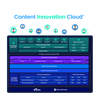
Hyland Content Innovation Cloud™
The platform to power content innovation
Content Innovation Cloud is the future of enterprise content management. By leveraging a unified content, process and application intelligence platform, your organization can unlock profound insights from enterprise content and unstructured data — fueling innovation without disruption.

Article
5 drivers for modernizing enterprise content
Legacy ECM systems create barriers to growth. Discover the five critical drivers for modernization and how AI-enabled platforms turn your content into your greatest competitive advantage.

Article
Switching to Hyland
Gain a cloud-native digital transformation strategy dedicated to better customer service — and smarter, stronger, faster growth. With Hyland, you can reach your full potential.

Article
Your agentic enterprise: The new reality of AI and enterprise content
Two breakthrough innovations radically expand the reality of what ECM means. With Hyland’s bold approach to weaving AI into your content universe, you can move faster than ever and realize incredible outcomes.